TRANSLATING VISION INTO REALITY: THE COLORTOPIA EXHIBIT AT EPCOT
Navigating strict schedules and cross-functional alignment to deliver a $14 million experience.
Delivering a high-profile environment for a global theme park requires more than just a compelling conceptual vision. It demands absolute operational discipline.
From 2015 to 2019, Colortopia operated as a premier exhibit at EPCOT, inviting Guests to physically engage with the science and psychology of color. Operating as the Creative Director (Temp) for Walt Disney Imagineering, my primary objective was to serve as the structural anchor for a 20+ person multidisciplinary team.
Over an aggressive 15-month fast-track schedule, I guided this diverse group of specialists to translate complex digital concepts into a buildable, high-capacity physical reality.

Stepping inside EPCOT’s exploration of color, creativity, and connection; a visual journey like no other!
THE STUDIO ENGINE: ESTABLISHING EXPERIENTIAL IDENTITY

Hands-on discovery! Families tested their knowledge of hues and shades through light and interaction.
A technology-heavy exhibit inherently risks becoming a chaotic collection of screens. To protect the Guest journey and maintain the momentum of the creative team, I anchored the technology within a cohesive experiential identity.
By utilizing 3D spatial logic early in the concept phase, I identified physical clashes between the show set elements and the digital hardware before they reached technical documentation. This proactive approach safeguarded the project budget and empowered the programmers to focus entirely on visual development without the friction of rework.
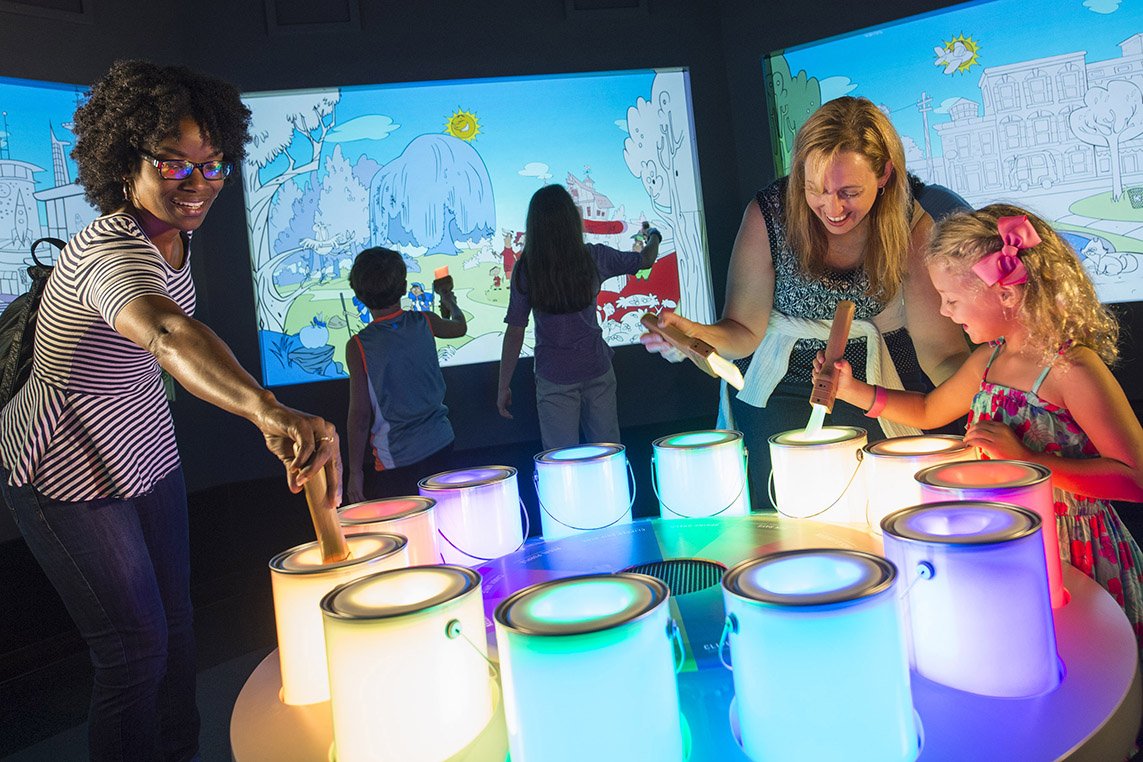
Feel the magic of glowing paints react to your touch in this creative bucket painting experience!
THE FIELD REALITY: PRESERVING THE CREATIVE INTENT
The true test of any experiential design is how it survives the construction site. As the project transitioned into production, my focus shifted to comprehensive Field Art Direction to defend the approved creative intent against physical constraints.
Bicoastal Vendor Management: I reviewed physical submittals and shop drawings to validate that the tactile elements (such as glowing paint buckets) meticulously matched the studio team's overarching vision.
Real-Time Spatial Problem Solving: Working directly with software developers and lighting designers on the active site, I navigated physical constraints in real time. This included adjusting station placements to optimize high-volume passenger throughput and maintain ADA compliance.
Sensory Equilibrium: I executed real-time color correction during the final commissioning phase. This supported the audio-visual integrators in verifying that the digital screens and practical scenic finishes operated in perfect harmony, preventing visual fatigue for the Guest.

Families creating masterpieces digitally in this one-of-a-kind coloring experience captured imaginations!
THE JLD ADVANTAGE: LESSONS IN OPERATIONAL EXECUTION
Executing a $14 million footprint proves a critical industry truth: successful design is not built in a vacuum.
It requires fostering collaborative, servant leadership. It is about equipping a team with proven themed entertainment mechanics to anticipate friction. Above all, it requires the executive discipline to guide a collective vision safely across the finish line.